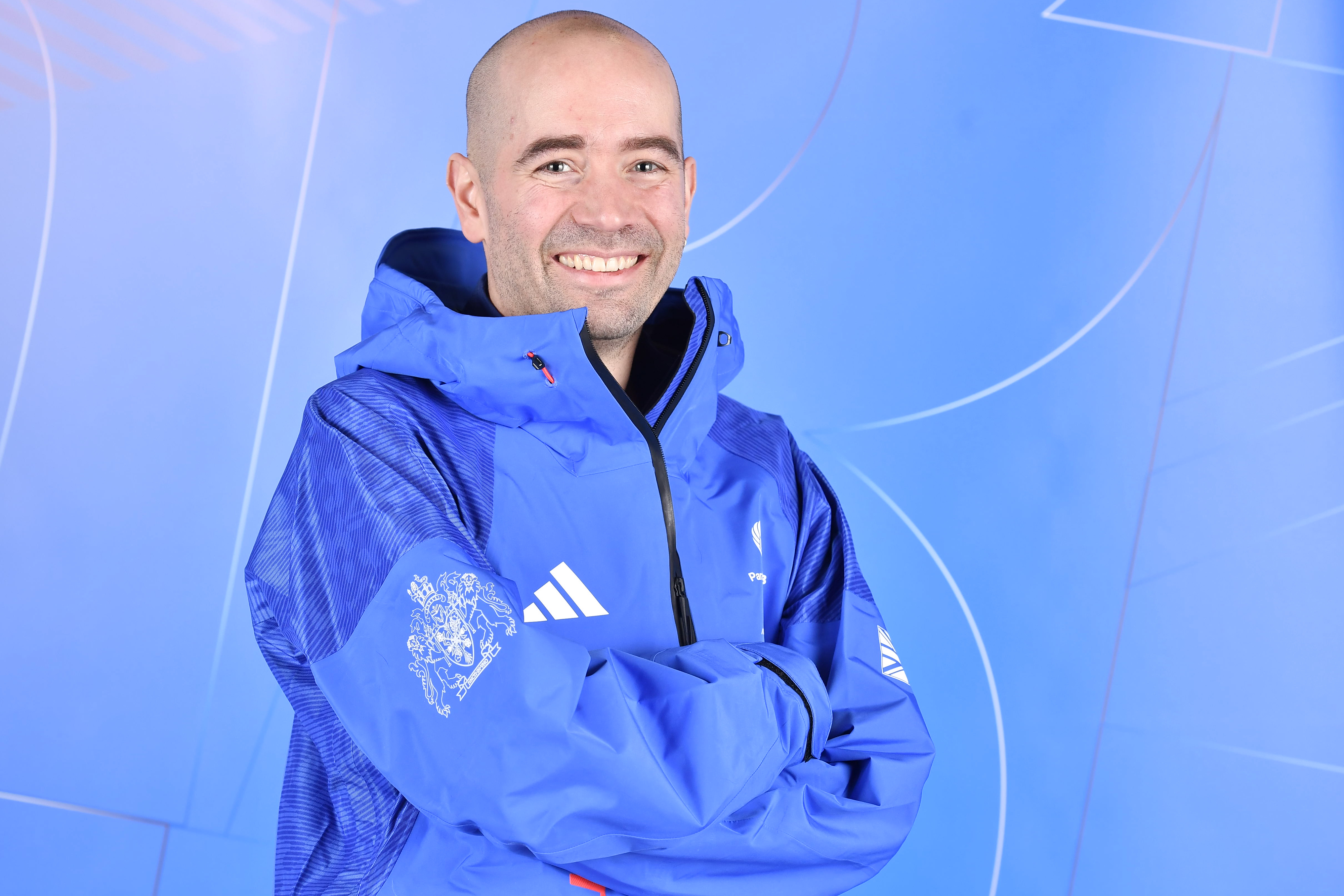
An Edinburgh snowboarder will become the first ever Winter Paralympian to compete with motor neurone disease (MND), after only deciding to try to qualify a year ago.
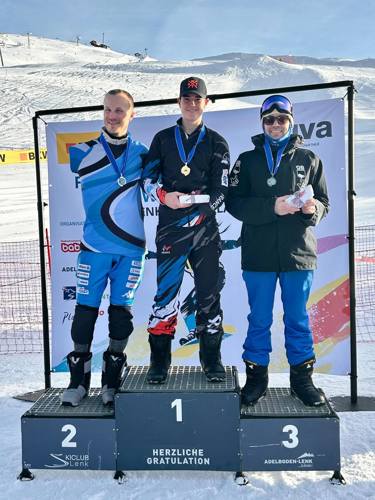
Davy Zyw will make history at the Milano Cortina Winter Paralympic Games when he competes in Banked Slalom and Snowboard Cross (SBX). He has today been confirmed as part of the ParalympicsGB squad after a host of recent podium finishes proved just enough to earn the 38-year-old qualification.
Zyw has always had a passion for snowboarding and had ambitions to be a full-time professional when he was younger. He competed across Britain and Europe in his teens and early twenties before a knee injury caused him to abandon the sport as a career.
Seven years after being diagnosed with MND, motivated by the chance to make history and a desire to raise awareness by representing the MND community on sport’s biggest stage, he started his campaign to ride at the Paralympics.
He only had a year to achieve the results required, he would have to do it while dealing with the physical and mental challenges he lives with and juggling time with his wife and son as well as his job as a wine buyer. After countless hours working with Snowsport Scotland and GB Snowsport coaches on his technique and sportscotland institute of sport experts to get him physically ready, he has achieved what to most would seem an impossible task.
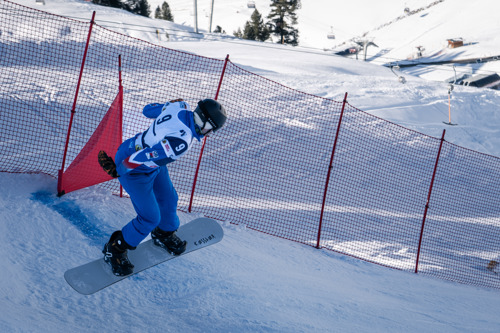
Davy said: “It’s an incredible feeling; to invest so much time and energy into it and know you’ve achieved something so big.
“To find out so late in the process as well, it was a nerve-wracking time. But to know that the time spent in the gym, spent training and spent away from family had all been worth it, it was a special feeling. It doesn’t seem real yet. I’ve put so much focus into just getting there, now the real challenge comes
“My wife, son and a lot of family and friends will be coming so it will be special.
“There were two reasons for going after this goal.
"One is to challenge myself, I love snowboarding. Outside of my family this is my main passion in life. But a big one was that no one with MND has ever competed at the Winter Paralympics, so I’m breaking new ground. It’s an incurable disease because it’s underfunded and awareness isn’t high enough.
“The reason I wanted to get to the Games was to represent and ride for everyone with neurological conditions, everyone who lives with it and everyone who is yet to be diagnosed.”
Despite his good level of snowboarding, his experience was mainly hitting jumps and rails, Davy was never a racer so a host of new techniques would need to be learned and some bad habits ironed out. The physical challenge was also a daunting one, the complex nature of MND means certain muscles are badly effect and others are not.
Keeping the strength in his neck in order to cope with the force applied while competing was a particular concern. A tailored programme was developed for Davy by sportscotland institute of sport experts John Coogans (Senior Physical Preparation Coach) and Kelly Horne (Physiotherapist), which would help him to compensate for the muscle weaknesses he has.
Fatigue is also a huge challenge for Davy, far from ideal when hours in the gym are required every week to help bridge the physical disadvantage he faces to many of his competitors.
He said: “My snowboarding was hitting jumps and rails. The racing circuit is totally different; I’ve had to learn a lot of new technique and skills. Everyone on the para circuit has their challenges. Mine are around strength and fatigue.
“People probably notice my arms and hands which are obviously challenged. But my neck is a big thing when I’m competing, being able to hold my head up in G force is tough. My whole upper body is compromised so I need to make sure my neck is a fresh as possible when competing.
“Getting dressed, getting boots on, getting my bindings on are all challenging. When I’m snowboarding you need a lot of strength and dexterity so it can be really difficult, it’s a physical sport and I’m not as physically capable as a lot of riders in the field. So I need to make speed up elsewhere, mainly in technique.
“I work closely with John Coogans and Kelly Horne at sportscotland. MND is a really complex disease, I’ve got some muscles I don’t have others. They look at my full mechanics, which is really reassuring and we do a lot of work to compensate for that or share the load.
"The benefits of my work with the sportscotland institute of sport have been incredible to help me get the most out of the muscles I do have. I’m there two or three times a week at Oriam, it’s been a game changer.”
John Coogans, Senior Physical Preparation Coach at sportscotland, said: “Davy is a such a personable and motivated guy, his attitude every day makes a huge difference to what he’s able to achieve. One of the big things for Davy was fatigue management. We had a short window to get as much strength into him as we could but we didn’t want that having an impact on his clinical condition. Davy was all in, he’ll always try to do as much as he can, but we measured it carefully to make sure he wasn’t doing too much.
“It was a balancing act with the timescale we had. It was obviously imperative we got results quickly, but with that load you can have an increase in the chance of injury.
“Training is testing for him, but we’ve seen the benefit it has had. It’s phenomenal what Davy has been able to do. Often we see athletes early in the morning, you sometimes see people at their worst when they’re still coming to terms with the day.
"Davy is consistent. He turns up, he’s engaging, he’s across his numbers and knows everything he needs to do. He’s personable, he’s committed and he’s laser focused on what he’s doing. He shows all the behaviour we’d expect of an elite athlete.”
In 2018, Davy’s world was turned upside down. Davy felt paralysis in one of his thumbs and when using dumbbells at the gym, one arm had become noticeably weaker. After over a year of going to multiple specialists and undergoing a range of tests, MND was finally diagnosed. Statistics show that most people who are diagnosed will only live for two or three years.
After a period of time coming to terms with it and spending time with family, Davy searched out things he would enjoy doing and challenges which would keep him fit and focused as well as raise awareness around MND.
He became friends with Doddie Weir, his foundation supported Davy and he’s raised huge amounts for the charity. He cycled the North Coast 500 in four days and raised over £250,000 for the MND charity.
Davy said: “When I was diagnosed I had to ask myself some pretty big questions.
“I’m conscious that most people diagnosed with MND are dead two or three years after diagnosis. In our community I’m one of the lucky ones, I’m seven years in, so I want to do what I can with the time I have.
"One in 200 people in the UK will die with MND. That’s quite a high number and the reality is you don’t hear about it because usually people die very quickly.
“I became really friendly with Doddie. He was amazing, he put me in touch with all the doctors he saw. His charity have been amazing for me as well
“I wanted to move back to Scotland, spend more time with my girlfriend then wanted to get married. I wanted to do things for me and my family. Around the two-year anniversary of my diagnosis, which is when most people would be on a ventilator, I cycled the North Coast 500 for the charity and raised £250,000.
“Keeping positive and keeping fit has been the best medicine I’ve had. Having these challenges keeps me sharp and motivated, I’ve always liked having a goal. And the Paralympics has been the ultimate challenge.”